
Fruit Seedlings
Showing 25–48 of 60 results
-
Fruit Seedlings
Grapefruit seedlings
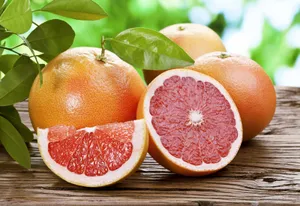
The grapefruit (Citrus × paradisi) is a subtropical citrus tree known for its relatively large, sour to semi-sweet, somewhat bitter fruit. It ranges in diameter from 10 to 15 cm (4 to 6 in). Its flesh is segmented and acidic, varying in color depending on the cultivars, which include white, pink, and red pulps of varying sweetness (generally, the redder varieties are the sweetest)
As a source of vitamin C, the grapefruit is exceeded among common fruits only by the orange and lemon.SKU: n/a -
Fruit Seedlings
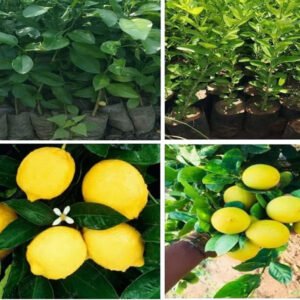
Lisbon Lemon Seedlings
Lisbon lemon trees are vigorous, evergreen citrus trees known for their juicy, tart lemons and are ideal for warm climates.Origin: The Lisbon lemon tree is believed to have originated in Portugal and is a popular variety grown in various citrus-producing regions, particularly in California and Australia.
Fruit: The lemons are bright yellow, oval-shaped, and have a thin rind, making them excellent for juicing and culinary uses. They are mostly seedless and have a strong citrus flavor.Growth: Lisbon lemon trees can grow up to 15-25 feet tall when planted in the ground, but they can also be maintained in pots for smaller spaces.SKU: n/a -
Fruit Seedlings
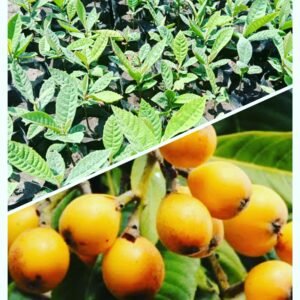
Loquat Seedlings
Loquat is an evergreen tree that mostly grows in tropical & sub-tropical areas. It is moderate in size that may reach 20-30 ft tall and produces yellow plum-like fruits when ripe; in fact it is referred to as the Japanese plum. The tree has a rounded crown, short trunk and new wooly twigs. Generally loquat fruit trees are east to grow and low maintenance.
SKU: n/a -
Fruit Seedlings
Medlar Fruit Seedling
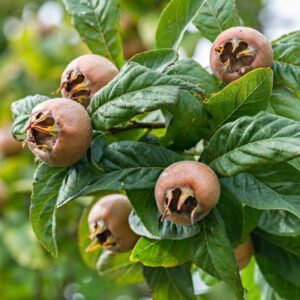
The medlar fruit (Mespilus germanica) is small, typically measuring about 2 to 3 cm in diameter, and resembles a large rose hip. It has a reddish-brown color with a slightly pockmarked surface and wide-spreading persistent sepals around a central pit, giving it a hollow appearance. The fruit is often described as looking unattractive or even spoiled when ripe, as it undergoes a process called bletting, which causes the skin to wrinkle and darken.
Ripening Process
Medlar fruit must be allowed to blet before it is edible. This process involves letting the fruit sit for a few weeks after harvest, during which time it softens and develops its flavor. The fruit is typically harvested after the first frost, as this helps to initiate the ripening process. Once bletted, the flesh inside becomes soft and mushy, similar to thick applesauce, and the flavor transforms into a sweet, spiced profile with hints of cinnamon and vanilla.Culinary Uses
Once ripe, medlar fruit can be eaten raw, often enjoyed with sugar and cream, or used in various culinary applications such as jams, jellies, and desserts. The high pectin content of the fruit makes it particularly suitable for preserves. Despite its unusual ripening requirements, medlar fruit is gaining popularity among food enthusiasts and is considered a delicacy by some.
In summary, the medlar fruit is a unique and flavorful fruit that requires patience to enjoy, as its best flavor is achieved only after undergoing the bletting process. Its soft, sweet flesh and historical significance make it a fascinating fruit worth exploring.
SKU: n/a -
Fruit Seedlings
Meyers Lemon Seedlings
Meyer lemons are a small, sweet hybrid lemon. They’re thought to be a cross between a regular lemon (Eureka and Lisbon variety) and a mandarin orange. They have a smooth, thin rind with a deep yellow hue. Their pulp is pale orange, with a sweet, floral taste
The Meyer lemon is sweeter than other lemons with only a slight tartness, and is said to taste a bit like a tangerine, or a navel orange. It is used often to season fish and seafood.
SKU: n/a -
Fruit Seedlings, Oranges
Minneola Tangelo Orange Seedlings
Minneola tangelos are a part of the Citrus genus and are a hybrid variety belonging to the Rutaceae family, a shallow-rooted evergreen shrub or tree that grows about 7.5 m high and in some cases up to 15 m with an enclosed conical top and mostly spiny branch. The plant is found growing in fertile, light to medium, well-drained, deep, loose loams; soils with a high water table should be avoided. The species is sensitive to excess salts; a pH range of 5-8 is preferred. The tree is commonly cultivated for its fruit in warm temperate
SKU: n/a -
-
Fruit Seedlings
Persian Lime Seedlings
- Persian Lime: The most common variety found in grocery stores, known for its abundant fruiting and attractive appearance with petite leaves and white flowers.
Persian lime (Citrus × latifolia), also known by other common names such as seedless lime, Bearss lime, Tahitian lime, and Tahiti lime, is a citrus fruit species of hybrid origin, known only in cultivation. The Persian lime is a triploid cross between Key lime (Citrus × aurantiifolia) and lemon (Citrus × limon).Although there are other citrus species that are referred to as “limes”, the Persian lime is the most widely cultivated lime species commercially, and accounts for the largest share of the fruits sold as limes. The fruit turns yellow as it ripens, but it is universally sold while still green

SKU: n/a - Persian Lime: The most common variety found in grocery stores, known for its abundant fruiting and attractive appearance with petite leaves and white flowers.
-
Fruit Seedlings
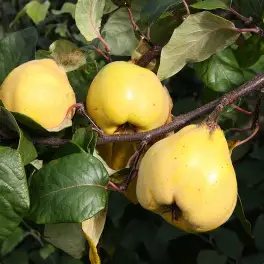
Quince Fruit Tree Seedlings
Quinces are shrubs or small trees up to 4 to 6 metres (13 to 20 feet) tall and 3 to 4.5 metres (10 to 15 feet) wide. Young twigs are covered in a grey down. The leaves are oval, and are downy on the underside. The solitary flowers, produced in late spring after the leaves, are white or pink.
The ripe fruit is aromatic but remains hard; gritty stone cells are dispersed through the flesh.It is larger than many apples, weighing as much as 1 kilogram (2.2 lb), often pear-shaped but sometimes roughly spherical.
The seeds contain nitriles, common in the seeds of the rose family. In the stomach, enzymes or stomach acid or both cause some of the nitriles to be hydrolysed and produce toxic hydrogen cyanide, which is a volatile gas. The seeds are toxic only if eaten in large quantities.
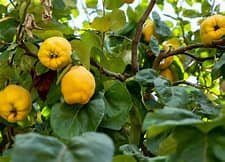
Where to buy quince tree seedlings in Kenya? Pasharn Fruit Nursery Ltd.
SKU: n/a